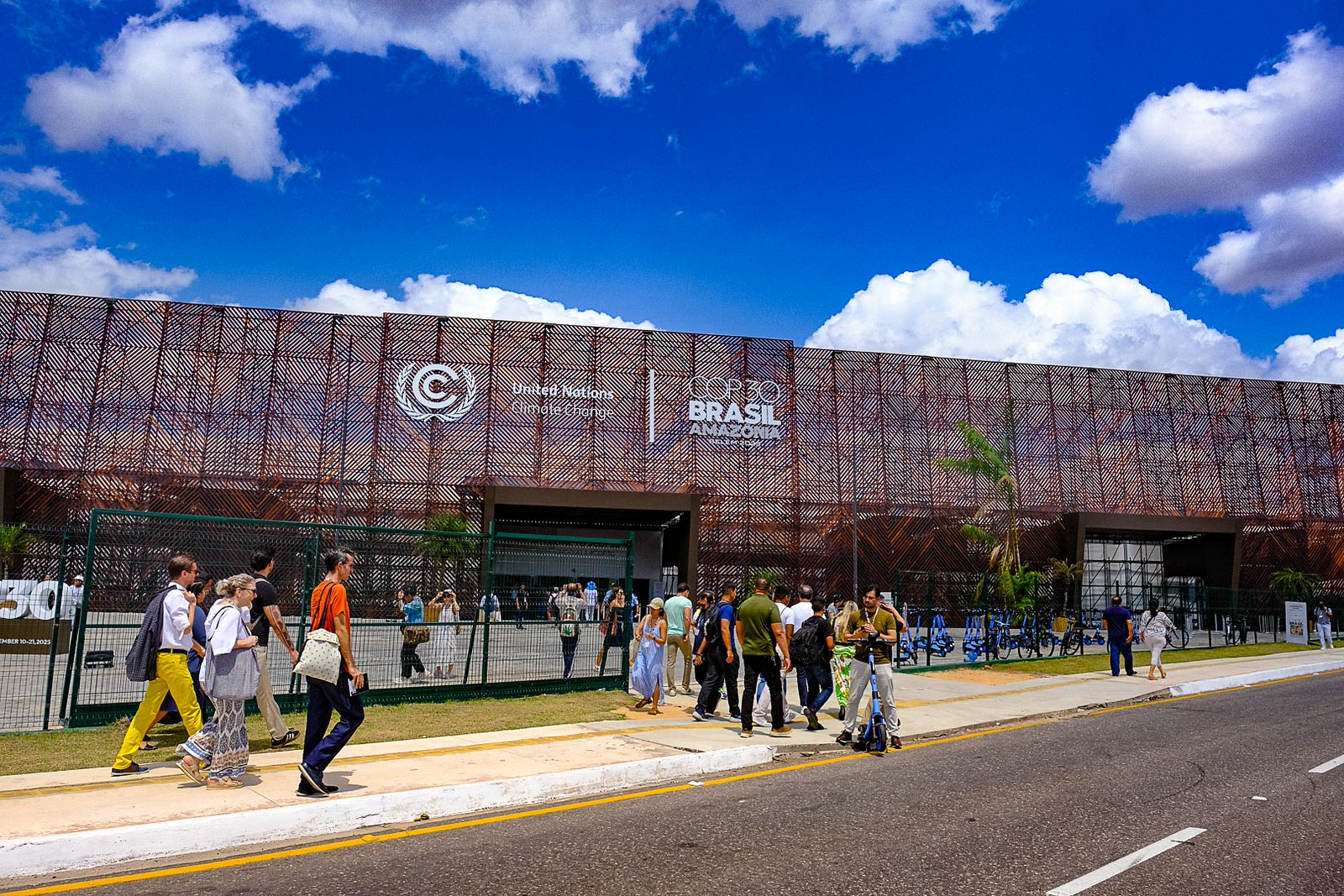





“COP30 must be the COP of adaptation,” said Correa do Lago, President of COP30, in the buildup to the conference in Belém, where he addressed the Global Goal on Adaptation (GGA), namely the process that has evolved from Paris to Brazil through the UAE-Belém work programme and a list of indicators defined by an international group of experts. Adaptation, how to measure it, and how to fund it, is therefore at the heart of COP30.
“The Paris Agreement introduced the concept of a GGA, similar to the global mitigation goal. However, unlike mitigation, where progress can be tracked using a single metric, adaptation requires a more complex approach. As such, GGA aims to increase adaptive capacity, strengthen resilience, and reduce vulnerability to climate change,” says Dasgupta, whose contributions to the UAE–Belém work programme – as one of the international experts focussing on food and agriculture production, and health-related issues – has helped provide a comprehensive framework to track progress in adapting to climate change.
“The expert group’s work started with a list of 9,529 indicators based on submissions from Parties and observer organisations. We then worked to reduce and refine the indicators during July and August 2025 so as to arrive at a list of 100 indicators,” says Dasgupta.
These 100 indicators will form the foundation for countries to report on adaptation progress and for the global community to assess whether adaptation action is keeping pace with the scale of climate impacts.
“We tried to provide a robust foundation for assessing progress towards the targets of the UAE Framework while aligning with the guidance and criteria outlined in various decisions relevant to the Framework. The indicators reflect a balanced approach that captures the breadth of the different components of each of the targets,” continues Dasgupta.
Finalising the indicator list is a critical achievement that goes to the heart of the complex dynamics of climate negotiations.
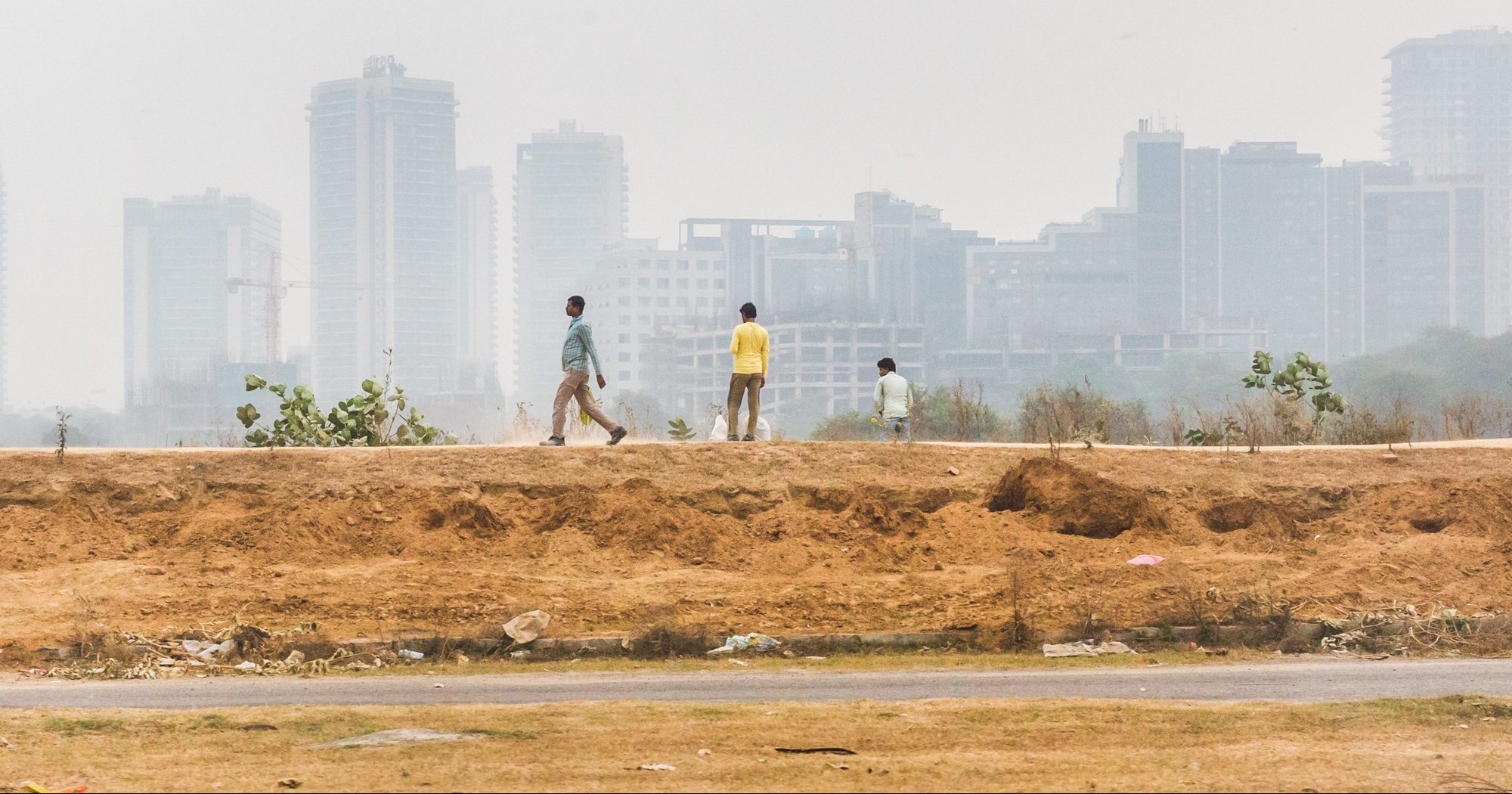
Developing countries face the heaviest climate burdens but have the least financial capacity to respond. “GGA is meant to serve as a unifying framework to drive political action and finance for adaptation on the same scale as mitigation. This means setting specific, measurable targets and guidelines for global adaptation action. Ideally, GGA will be adopted at COP30. The main point of contention will be (as usual) finance, more specifically: gaps in adaptation finance,” says Dasgupta.
According to Dasgupta, the conversation around finance extends to issues around “Means of Implementation” – namely the full toolkit countries need to adapt effectively. “More broadly the Means of Implementation indicators – finance, technology, capacity-building in the context of the GGA indicators and possibly setting of new finance ambitions,” he notes.
Shouro Dasgupta at COP30
Shouro Dasgupta is at COP30 as a member of the scientific support team for the Burkina Faso delegation. His work focuses on the intersection of climate and health.
Dasgupta contributed to the latest Lancet Countdown on Health and Climate Change, a landmark report tracking the health impacts of climate change across 57 indicators. His presence in the climate and health negotiations reflects a broader COP30 commitment: recognising that climate resilience is not only an environmental imperative but a health imperative. Heat-related deaths, food insecurity, water scarcity, and disease spread are already accelerating. Adaptation measures that build water security, support agricultural resilience, strengthen health systems, and protect workers from heat stress are health interventions.