Artificial intelligence and data centers are becoming a key issue at COP31, with the Turkish Presidency set to launch the Antalya AI Pledge on 16 November, a voluntary commitment to promote more sustainable AI across its design, energy supply, use and governance. CMCC – which is playing an active role in the negotiations – has identified three key areas of the AI and climate science debate:
- How AI is transforming climate science, opening new possibilities for research, modelling and our understanding of the Earth system.
- How AI is applied to Earth system modelling and climate challenges, through innovative approaches such as the EarthGenerator foundation model.
- The environmental footprint of AI, including the growing energy demand of data centers and possible pathways towards more sustainable solutions.
AI is transforming climate science
Machine learning and data-driven methods are opening new possibilities for climate research, changing how scientists process data, investigate complex processes and develop models. They are expanding the range of scientific questions researchers can address and creating new opportunities to understand the Earth system.
For Antonio Navarra, CMCC President, this transformation is not simply about developing faster or more powerful tools: it also means rethinking how scientific knowledge is produced.
“AI, Machine Learning (ML) and data driven methods are actually increasing the set of problems that we can treat. Before we were bound by a certain mathematical description of the problem we could solve but these new methods make that set bigger. We can now extract formulations from data, which is a totally new approach and one of the most disruptive aspects of the ongoing revolution in science.”
AI models for the Earth system
How can AI help us better understand and anticipate changes in the Earth system? EarthGenerator, a project coordinated by CMCC, aims to develop an Earth System Foundation Model that could open new possibilities for climate research. By leveraging AI, the model accelerates data processing, helps fill gaps in observational records, improves forecasting capabilities and enables researchers to explore complex interactions across different components of the Earth system.
One of the model’s most promising features is its potential to bring together different research disciplines, allowing scientists to investigate how physical and socioeconomic processes interact under changing climate conditions. As Italo Epicoco, CMCC scientist and EarthGenerator’s Scientific Leader, explains:
“The key innovation lies in building a Foundation Model capable of representing the different components of the Earth system, starting with the atmosphere, the ocean and land. This model could also be used to develop application-specific models for areas such as food security, climate-related migration, extreme events and the carbon life cycle.”
The environmental footprint of AI
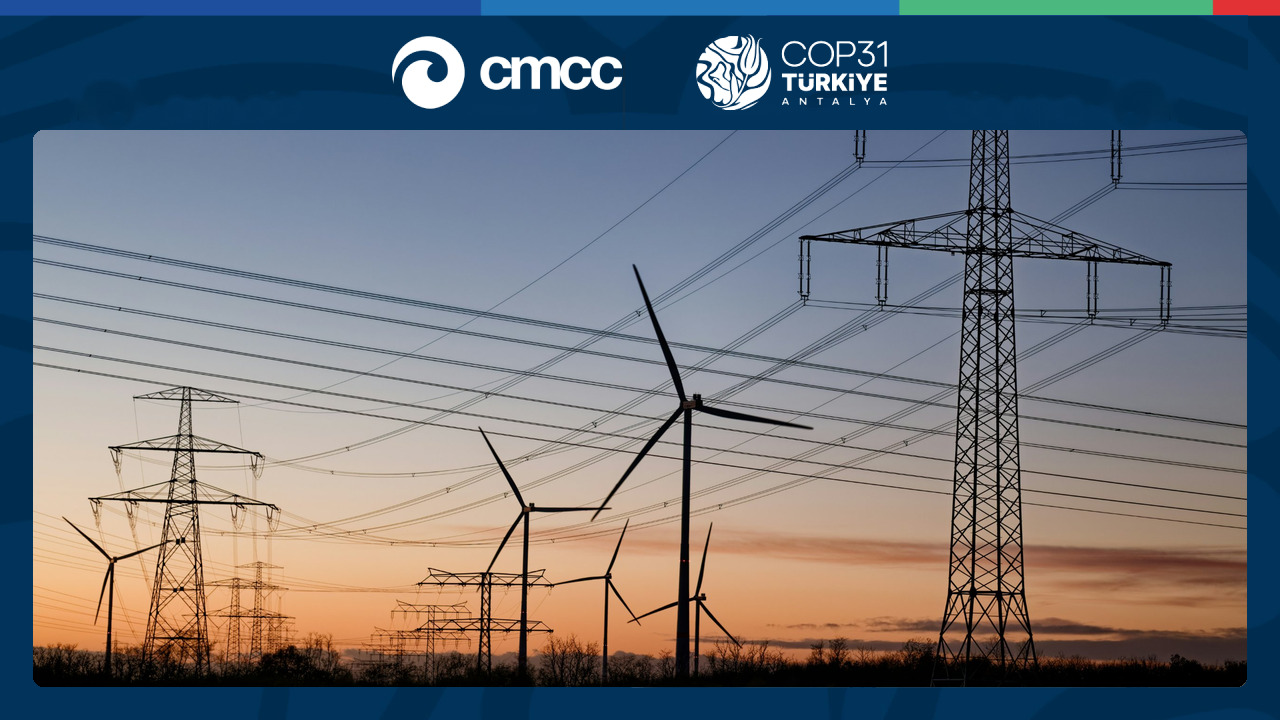
AI can support climate research, but its rapid expansion also brings growing demand for electricity and computing infrastructure. The International Energy Agency projects that global data-centre electricity consumption will roughly double between 2025 and 2030, with AI-focused facilities growing faster still.
For Soheil Shayegh, CMCC scientist, balancing AI’s potential benefits against its environmental and social costs is a key challenge. Data centres require large amounts of electricity and water, while their waste heat can also affect surrounding environments. “The nearby communities and ecosystems have to bear the costs now, while the potential benefits won’t reach them until all the research is translated into meaningful action,” says Shayegh.
Reducing this footprint requires more than improving energy efficiency. Shayegh highlights the importance of integrating data centres into energy planning, coordinating electricity supply and demand, and shifting energy-intensive computing tasks to periods when renewable electricity is more readily available. AI can play a big role here, for example in forecasting demand peaks and supply shocks from weather extremes.
These issues will be explored at the COP31 side event “Powering AI, protecting the climate: Data centres, integrated solutions and verified benefits” (10 November 2026, 17:30–19:00 TRT, Italy Pavilion), where Shayegh is a panellist. The discussion will address how integrated energy planning, renewable power, heat recovery and monitoring can help reduce the environmental footprint of data centres and verify the climate benefits of proposed solutions.