


Climate Policy

Understanding COP30: How climate negotiations change after Belém

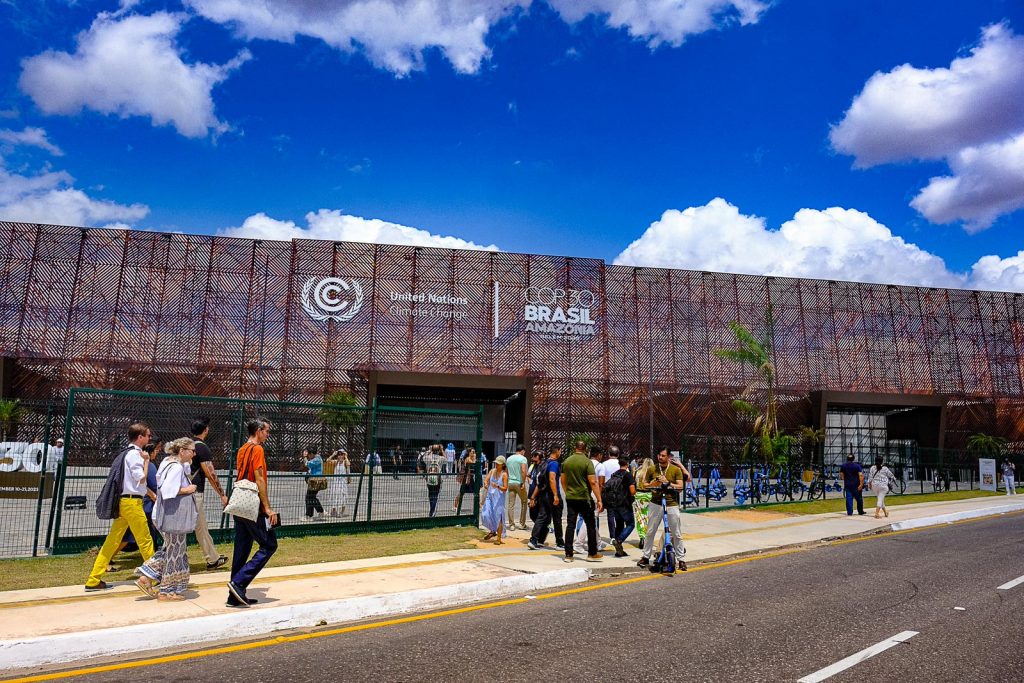
The climate conference in Brazil took place amid seesawing expectations on key issues in climate policy. In the end, the closing texts from COP30 include updates and decisions that will mark the next steps in the international negotiation process. The experts and scientists from the Italian delegation that participated in the negotiations unpack the outcomes of the Belém Conference, with in-depth insights and discussions on adaptation, finance, the Paris Agreement, the role of science, policy and society at large.


Forest and horizon

COP30 | Carlo Carraro: A new climate finance model to reward those who protect tropical forests

According to the economist and climate scientist, TFFF might mark a pivotal moment in climate policies. “This is a turning point: for the first time, the Global South is leading a major climate finance initiative, which increases its legitimacy and political relevance.” Carlo Carraro highlights that the fund “reverses the economic logic that has historically favored clearing trees for agriculture and timber,” and comments on the role of the World Bank to ensure transparency, accountability, and investor confidence.

Tropical forest

COP30 | Riccardo Valentini: Forests, from carbon sinks to engines of a Green Economy

As COP30 opens in Brazil, attention turns once again to the world’s forests – not only as carbon sinks, but as living systems vital for the planet’s health and for sustainable development. According to IPCC author and forest ecology expert Prof. Riccardo Valentini, stopping deforestation is no longer enough – we need a new global paradigm for more sustainable forest management, agriculture, and land use. “Tropical Forests Forever Facility (TFFF) could open a new phase for the green economy, linking forest protection with real economic returns through carbon markets and sustainable business investments,” he says. “But without political will, it risks becoming another empty pledge.”

Overshoot: Navigating the challenges of exceeding global warming limits

The goal of limiting global warming to 1.5°C has become a cornerstone of international climate policy. However, as greenhouse gas emissions continue to rise and the impacts of climate change intensify, surpassing this threshold is looking increasingly likely, if not inevitable. This scenario raises urgent questions about the risks involved, the feasibility of returning to safer temperature levels, and the social and economic trade-offs associated with such pathways. New tools and research, such as CMCC’s overshoot platform based on the work of an international team of scientists and design experts, can help answer these questions.

COP16

COP16 in Rome: Bridging the biodiversity finance gap

The COP16 on Biological Diversity reconvened at the headquarters of the Food and Agriculture Organisation of the United Nations in Rome between 25 and 27 February, providing a critical juncture for global biodiversity conservation and the role of science in informing international negotiations. “Until we establish governance that treats climate and biodiversity as two sides of the same crisis, we will continue to fail in finding effective solutions,” says CMCC researcher Cristina Cipriano, who participated in the proceedings as coordinator of the European Regional Chapter and the Italian National Chapter of the Global Youth Biodiversity Network.

abstract red and blue building

It’s a wrap! The climate in 2024

As 2024 comes to a close we look back at the most important climate events, meetings, negotiations and initiatives from the last twelve months. Our research and data, articles and projects reveal a year that has been rich with developments and change in both the climate itself and what we can expect from the future.

US elections climate finance

US elections and the power to make or break climate finance

From Obama to Trump, then Biden and Trump again. The US presidents who have come and gone over the past quarter century have brought different visions and policies when it comes to climate finance. Leveraging her experience in policy analysis of international environmental and climate agreements, CMCC researcher Semercioglu Nazlicicek outlines the history of US contributions to loss and damage funding and what we can expect from a second Trump term in office.

baku at sunset

Back from the enabling COP: Negotiators analyze outcomes from Baku

Climate finance was front and center, while a leading actor was relegated to a sideline role. In a CMCC webinar, negotiators returning from Baku take stock of key aspects of COP29, such as the complex context of the negotiations, decisions on the New Collective Quantified Goal, the Baku-to-Belem roadmap, news on the carbon market, global cooperation, and adaptation. Throughout, it emerges that bridging scientific insights with policy is more essential than ever to transform commitments into meaningful climate action.

people on a cliff with sunset

UN Pact for the Future: The new global roadmap to sustainability

The United Nations recently adopted the UN Pact For The Future, its latest framework aimed at addressing global challenges and accelerating progress on the Sustainable Development Goals (SDGs), reforming international financial systems to better serve developing nations, tackling climate change, and governing emerging technologies like artificial intelligence. We take a closer look at what this means for climate science.

case circondate dall'acqua sotto il cielo nuvoloso

COP29 Spotlight | Loss and Damage funding has to be at core of new climate finance regime

The focus of the ongoing COP is to decide on a new finance regime. Major polluters will be asked to massively increase their financial contributions to developing nations. Researchers from IIASA and CMCC show that Loss and Damage needs of vulnerable countries range between roughly 130 and 940 billion Dollars in 2025 alone. On top of money for mitigation and adaptation.

COP29 Spotlight | A collective financial goal for a just transition

Mitigation and adaptation finance are critical elements in climate negotiations aimed at building a more resilient future. “COP29 has already been called ‘the Finance COP’ due to the importance of the New Collective Quantified Goal on Climate Finance (NCQG), which will replace the previous USD 100 billion goal,” says Marta Ellena, CMCC researcher and member of the Italian delegation to COP29. Frontier climate research, such as that conducted at CMCC, can support international and local climate financing mechanisms by quantifying needs, evaluating and devising effective policies, and ensuring accountability and transparency of financial flows.

biodiversity

Halting biodiversity loss: More than just an environmental imperative

Climate change and biodiversity loss are intertwined crises with common causes and effects. Research, science-based tools, and collaboration are taking center stage as national and international efforts to understand, monitor and promote biodiversity ramp up. From the ongoing COP16 on Biological Diversity to the National Biodiversity Future Centre, Italy’s first National Research and Innovation Center dedicated to biodiversity, getting accurate knowledge and data to decision makers and stakeholders is key.