




An article by Ginevra Gatti
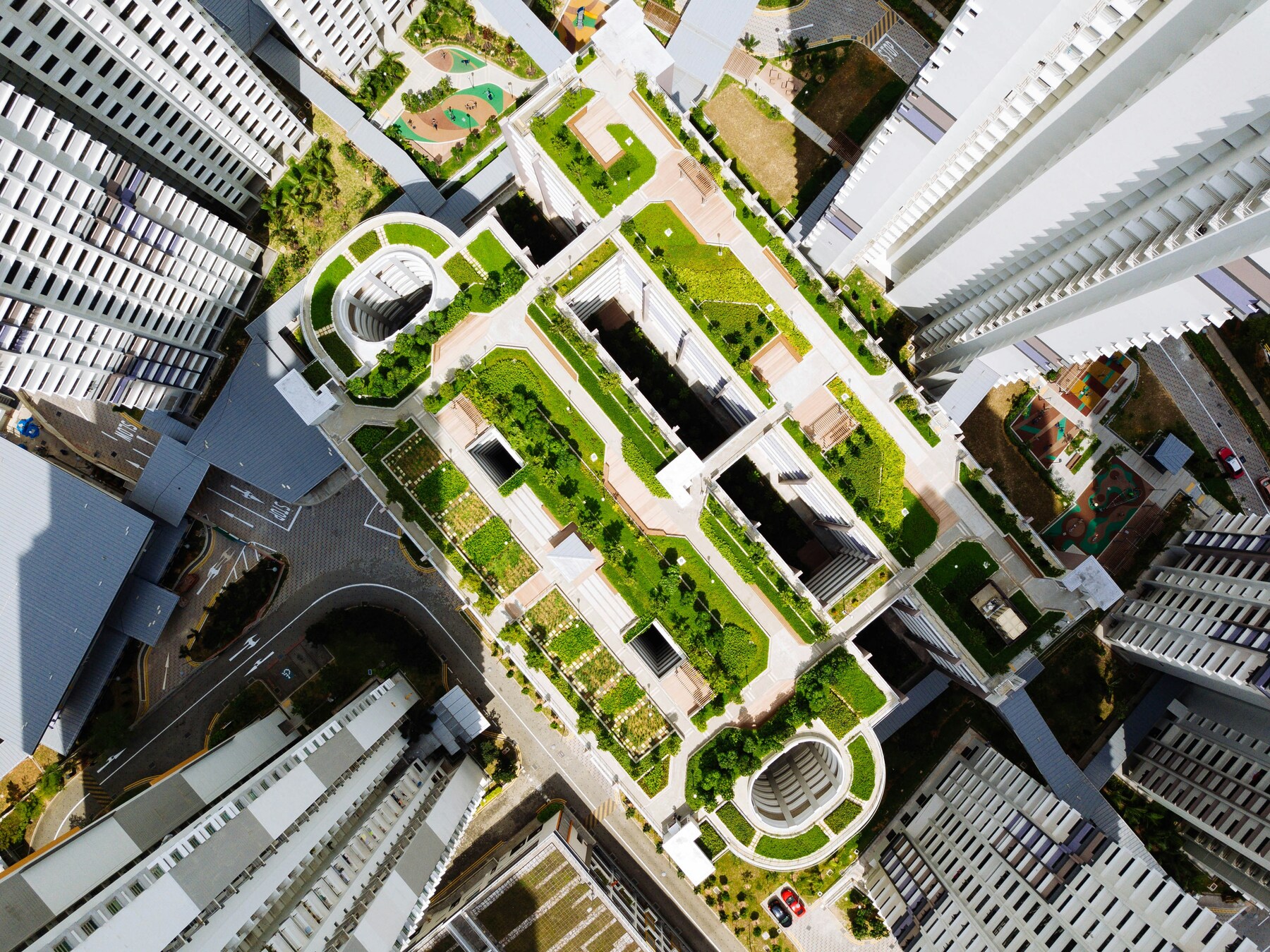
Cities are the visible projections of many situations which are expected to occur widely in the future, such as warmer temperatures, higher rates of carbon dioxide (CO2) concentrations and severe droughts. Nevertheless, cities also show the occurrence of such conditions in an urban context, which differs from the natural one in terms of characteristics and possible interactions among its living beings. So, can cities be a useful field of survey to understand and predict future scenarios?
Some researchers from the North Carolina State University tried to answer this question through a review published on Proceedings of the Royal Society B.
In the research, they studied plant and insect species interactions and responses to both climate and urban variables; firstly, to track and compare them with experimental predictions and historical data; secondly, to state if and to which extent urban centres can be employed as proxies to predict species’ future patterns.
As Prof. Steve Frank, co-author of the paper, highlighted, the main challenge is to disentangle climate variables (such as temperature) from co-occurring or confounding urban variables (such as impervious surface) to then understand the interactive effects of multiple climate variables on both individual species and species interactions. In his words: “Cities have unique features like buildings and cars that could be confounding variables and need to be accounted for. Likewise, effects on small or immobile organisms like insects and plants may be different from effects on birds, for instance, that could leave a city if it gets too hot.”
However, cities, with their specific characteristics, can replicate conditions which are hard to achieve experimentally: the high levels of traffic make them register incredible rates of CO2 concentrations; the impermeable building materials like concrete and glass, on the one hand cause the “urban heat island” effect, creating warmer temperatures; on the other, prevent water from soaking into soil, simulating a condition similar to that of droughts.
Moreover, considering the difficulties existing in experimental manipulation of climate variables, in the cost of manipulating multiple variables or species over long periods of time and in the geographic restriction of many experimental systems to temperate latitudes, addressing research specificities by using urban data will produce cost-effective results that are more generalizable between individual study systems, cities and ecosystems. Furthermore, in some cases, Prof. Frank says the effects registered in cities are clear and match those of climate warming in natural areas.
For this reason, in the paper the authors try to determine the circumstances in which urban centres can be effective surrogates of the consequences of global change, by discussing the types of hypotheses that can be best tested in cities. In fact, urban research could be a complementary source of information to field experiments, growth chamber studies and modelling efforts, which, combined with experimental and historical data, will help define testable hypotheses and predictions on broader regional- and ecosystem-level patterns in the future.
As the researchers conclude, species responses and interactions in cities are currently an underused resource in making broader ecological predictions. Most of the reviewed research took place in North America and Europe, while more research is needed in African and Asian cities, where biodiversity hotspots may see large climate effects. Urban data on biodiversity have great potential in a number of sectors. For instance, according to Prof. Frank, “this information will help people involved in conservation and land management plan for the future.”
Read the full paper: “Getting ahead of the curve: cities as surrogates for global change”