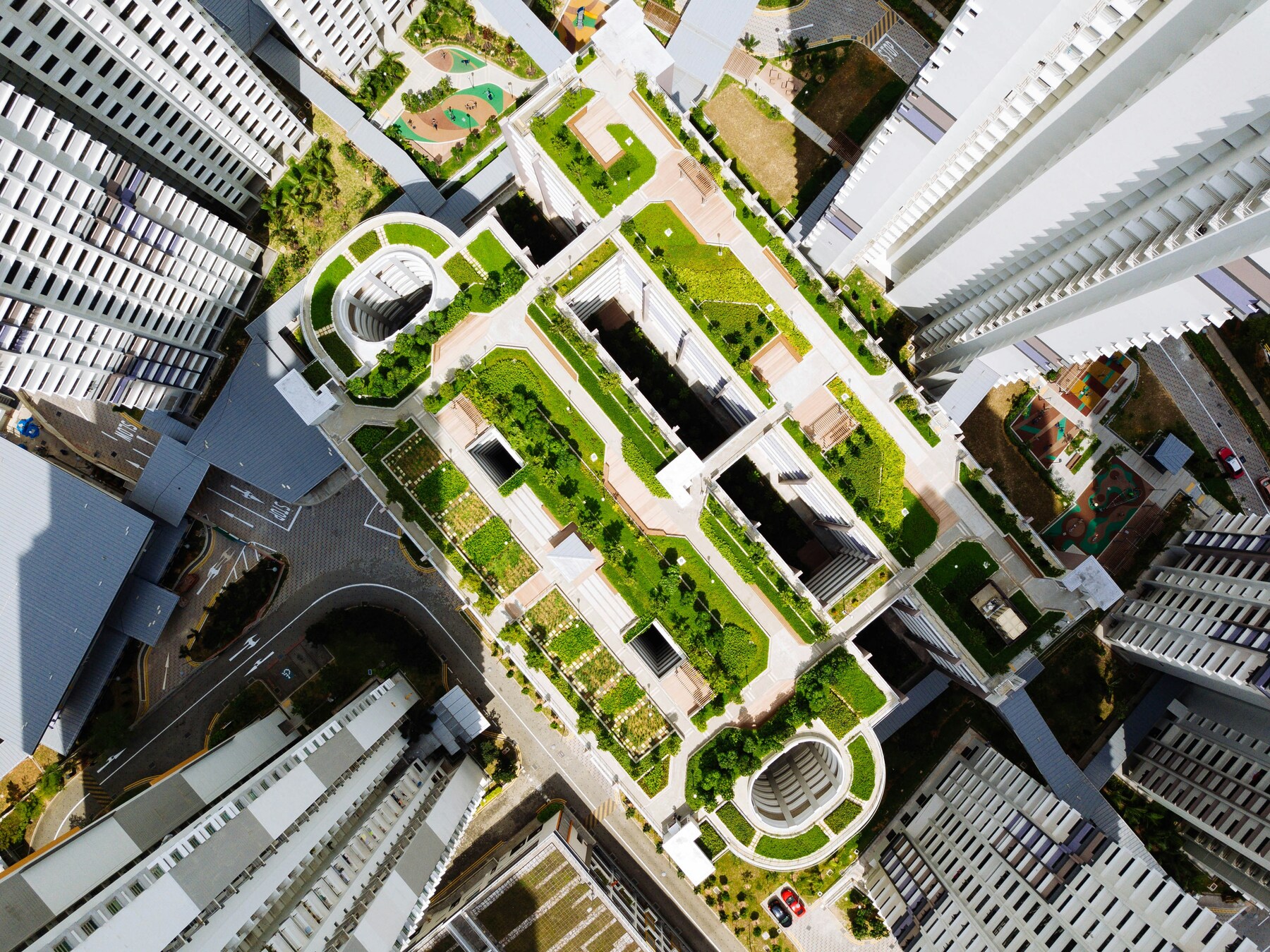





Buildings hold a significant place in our daily lives, serving as the backdrop for our residences, workplaces, and social interactions. They serve as tangible representations of various historical eras and evolving architectural styles, while also housing our educational and healthcare systems.
Global population growth, increasing per-capita living space, and expanding services and domestic amenities have all contributed to a substantial upsurge in greenhouse gas emissions from buildings. Over a span of three decades, from 1990 to 2019, emissions from buildings, both residential and commercial, surged by approximately 50%.
These emissions encompass both direct and indirect sources. Direct emissions stem from combustion activities, such as heating, while indirect emissions are associated with electricity generation for lighting and the operation of electrical and informational devices. Moreover, emissions resulting from the production of construction materials also play a significant role in the overall emissions tally.
Zero-impact buildings are becoming increasingly common across the globe, playing a crucial role in managing the energy consumption and carbon emissions associated with the construction industry.
A new report, titled “Building materials and the climate: Constructing a new future,” has been recently released by the UN Environment Programme (UNEP) and Yale Center for Ecosystems + Architecture (Yale CEA). The report, developed by experts from around the world, addresses the urgent need to decarbonize the buildings and construction sector, which currently accounts for 37% of global CO2 emissions.
The report aims to unite stakeholders from various sectors to collaborate on innovative pathways to achieve ethical decarbonization of construction materials by 2050. It aims to provide valuable guidance for policymakers, manufacturers, architects, developers, engineers, builders, and recyclers, offering strategies to reduce “embodied carbon” emissions and mitigate the environmental impacts associated with building materials production and use, including cement, steel, aluminum, timber, and biomass.
The report proposes a three-pronged solution as an essential approach for reducing emissions, safeguarding human health, and preserving biodiverse ecosystems throughout the building process. The Avoid-Shift-Improve solution involves three “urgent pathways”: first, avoiding needless extraction and production, second, transitioning to regenerative materials, and third, enhancing the decarbonization of conventional materials.
The report’s results suggest that to avoid excessive extraction and production, a circular economy must be promoted, focusing on constructing with fewer materials through data-driven design and prioritizing building reuse and recycling. Rethinking building design, especially during planning and design stages, is also crucial to prevent unnecessary extraction and production.
Paolo Bertoldi, a renowned expert in sustainable energy, climate change, and energy efficiency at the European Commission Joint Research Center, highlights a significant challenge. Much of the existing building stock in developed countries does not align with emission reduction targets necessary for achieving the global 1.5° goal.
“The building industry is among the largest energy consumers worldwide and, as a result, a significant contributor to greenhouse gas emissions, primarily due to its reliance on fossil fuels for energy,” said Bertoldi. “The building sector accounts for 21% of global greenhouse gas emissions, but it also presents a substantial potential for emissions reduction. To put it simply, it is often easier to reduce emissions in the building sector compared to the transport and industrial sectors.”
Another important link between buildings and climate change is in adaptation. “We use buildings for living, for working, so they have to provide a comfortable and safe space,” said Bertoldi. “For example, they should protect people from the harmful impacts of extreme weather events, or from extreme temperatures, such as heatwaves.”
Discussing the findings of the Working Group III contribution to the 6th Assessment Report of the Intergovernmental Panel on Climate Change (IPCC), Bertoldi emphasized the impediments to emission reduction. The slow rate of renovating existing buildings and the modest goals set for renovated structures hinder progress. Importantly, the technical solutions required for effective emission reduction are already available, and their implementation cost remains reasonable.
“Using renewable energy in the building sector and for domestic consumption is certainly positive. However, meeting the future high electricity demand is both challenging and costly,” said Bertoldi. “This is why I advocate for reducing energy consumption first, which proves to be cost-effective. Achieving this goal is possible through technologies such as well-insulated buildings, advanced appliances, and intelligent heating systems, among others.”
According to Bertoldi, these solutions encompass various aspects, including building design, form, and multifunctionality, allowing adjustments in building sizes to meet changing user needs and the repurposing of underutilized existing structures. These measures aim to reduce reliance on high greenhouse gas-intensity materials and additional land use.
“Globally, the building sector’s energy consumption is expected to increase dramatically, driven by population growth and increased GDP, especially in developing nations,” explained Bertoldi. “Therefore, even if advanced countries adopt top-tier technologies, achieving the 1.5° target is challenging. The focus needs to shift to construction demand and finding ways to curb it.”
The IPCC WGIII Report introduces the concept of energy sufficiency, grounded in the idea that the world’s carbon budget is limited and unevenly distributed across countries and continents. Policies promoting energy sufficiency, which significantly reduce energy and material demand, play a vital role in limiting global emissions. These policies encompass measures and daily practices that cut energy, material, land, and water demand while ensuring well-being for everyone on our planet.
“Developed countries emit 5 to 10 times per capita more than developing countries on average. While we hope for all nations to embrace sustainable practices in the building sector, it is crucial to adhere to an equitable carbon budget,” said Bertoldi. “I believe the Global North world should initiate a reduction in consumption guided by the sufficiency principle. This implies recognizing the finite resources we have inherited, including energy and renewables, and embracing the principle of fairness. It means ensuring the collective well-being without exploitation.”
This strategy involves, for example, embracing a sharing economy, where space is shared, re-utilised, reduced to what is really needed. Additional mitigation strategies involve utilizing low-emission building materials, sourcing energy from low-emission sources, and lastly, in the disposal phase, promoting recycling and reusing building materials is essential for a sustainable future.
“To address the challenges of climate change, a multi-faceted approach is essential. The first crucial step is reducing demand, followed by embracing the sufficiency principle, and finally enhancing building efficiency while maximizing the use of renewable energy sources,” said Bertoldi. “The notion of limitless land, energy, and material resources is no longer sustainable. Efforts to curb the environmental impact of construction and building use must be a joint endeavor involving all stakeholders, such as citizens, construction firms, manufacturers and policy makers. This represents our best chance at ensuring a sustainable future, to halt and reverse the current trend, and to align with pathways that limit global temperature increases to 1.5° or 2°.”